$60.52
$101.07
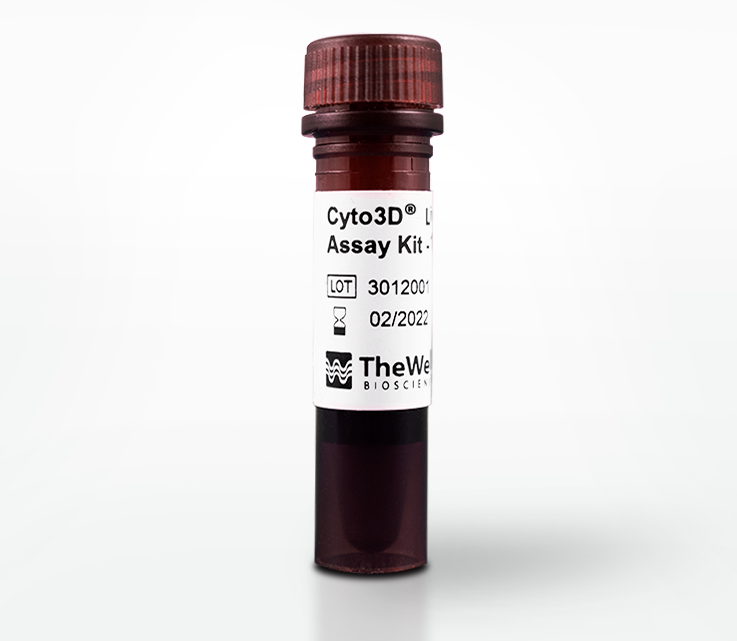
Cyto3D® Live-Dead Assay Kit Versatile live/dead assay kit for 3D & 2D Culture, Organoids, Spheroids, Stem Cells, Fluorescence Microscopy Versatile & Excellent for 3D/2D Cell Culture Works with cells cultured in hydrogels and animal-based ECM. Excellent for 3D cell culture. Fast & easy setup No pre-mixing required. Ready-to-use. Fast (5-15 minutes) one-step staining procedure for cell viability analysis. Even Staining & Clear Resolution Imaging No unevenness and no background staining for clearer imaging. The Cyto3D® Live-Dead Assay Kit is a versatile live/dead assay for 3D and 2D Cell Culture, Organoids, Spheroids, Stem Cells, and Fluorescence Microscopy. It is used to determine the live/dead nucleated cells using a quick one-step staining procedure for analysis on a dual-fluorescence system. The Cyto3D® Live-Dead Assay Kit is recommended for viability analysis of cells/organoids cultured in 3D, 2D coating, and on monolayer and works with cells cultured in animal-based ECMs and other hydrogel systems. Acridine orange (AO) and propidium iodide (PI), both nuclear staining (nucleic acid binding) dyes, are used in this kit. AO is permeable to live and dead cells and stains all nucleated cells to generate green fluorescence. PI only penetrates the membranes of nucleated cells with compromised membranes and stains the dead cells to generate red fluorescence. Due to the quenching, when cells are stained with both AO and PI, all live nucleated cells fluoresce green and all dead nucleated cells fluoresce red (the PI reduces the fluorescence intensity of the AO by fluorescence resonance energy transfer (FRET)). Non-nucleated materials such as red blood cells, platelets, and debris do not have fluorescence and are ignored by fluorescence microscopes. Dual-fluorescence viability, using AO and PI, is the recommended viability analysis method for cell lines, primary cells, and stem cells. Easy setup and use Specifications FormulationPremixed acridine orange (AO) and propidium iodide (PI), nuclear staining dyes UseLive dead cell viability analysis for 3D and 2D cell culture Detection MethodFluorescent Excitation/Emission: AO (494/517nm), PI (535/617nm) Standard filtersAO (GFP), PI (Texas Red) For use with (Equipment): Fluorescence microscope, flow cytometer, microplate reader, fluorescence cell counter. Storage2 to 8°C (Protect from light) Shipping Conditions:Ships at ambient temperature Sizes1 mL Number of reactions500 (at 2 µL per 100 µL) Protocols and Resources Cyto3D® Live-Dead Assay Kit Protocol Product Documentation Sales Sheet – Cyto3D® Live-Dead Assay Kit Product Data Sheet Material Safety Data Sheet (MSDS) Frequently Asked Questions Data and References Figure 1: Live-dead cell viability images: Intestinal organoids stained with Cyto3D® Live-Dead Assay Kit. Intestinal organoids were cultured in regulated conditions for 5 days. Six microliters of Cyto3D® reagent were mixed with organoid culture media (each well includes 150 µL of organoid culture media and 150 µL of hydrogel volume). The mixture was incubated at 37°C for 10-15 min, and the cells were observed under a fluorescence microscope. (A) A bright field image of a mature intestinal organoid. Images show live cells (B: Green) and dead cells (C: Red) in a mature intestinal organoid. Figure 2: Live-dead cell viability images: Intestinal organoids stained with Cyto3D® Live-Dead Assay Kit. Intestinal organoids were cultured in regulated conditions for 2-3 days. Six microliters of Cyto3D® Live-Dead Assay reagent were mixed with organoid culture media (each well includes 150 µL of organoid culture media and 150 µL of hydrogel volume). The mixture was incubated at 37°C for 10-15 min, and the cells were observed under a fluorescence microscope. (A) A brightfield image of a young, healthy intestinal organoid. Images show live cells (B: Green) and dead cells (C: Red) in a healthy intestinal organoid. Figure 3. Live-dead cell viability analysis by using Cyto3D® Live-Dead Assay Kit. Glioblastoma cells (SF 298, about 60% cell viability) were 3D cultured in VitroGel® system for 2 days. Two microliters (2 µL) of Cyto3D® Live-Dead Assay reagent was added to each well containing 50 µL hydrogel and 50 µL cover medium. The mixture was incubated at 37°C for 5-10 min. The cells were then observed under a fluorescence microscope. The images show the Live (green) and Dead (orange) cells within the 3D hydrogel matrix. The z-stack images of cells within hydrogel were then 3D reconstructed and shown in the 4D view images. The live and dead cells at higher levels of the hydrogel are clearly shown in the images using the Cyto3D® Live-Dead Assay Kit. Figure 4. Live-dead cell viability images of stem cell spheroids. Stem cells were static suspension-cultured in VitroGel® STEM (CAT# VHM02) for 5 days. Two microliters (2 µL) of Cyto3D® Live-Dead Assay reagent was added to each well containing 100 µL cell suspension. The mixture was incubated at 37°C for 5-10 min. The cells were then observed under a fluorescence microscope. The images show the Live (green) and Dead (orange) stem cell spheroids cultured in a 3D hydrogel matrix. The live-dead dyes of Cyto3D® Live-Dead Assay Kit can successfully penetrate into large cell spheroids for cell viability analysis. Resources using Cyto3D® Live-Dead Assay Kit White Papers A Quick Organoid Viability Measurement by Using Cyto3D® Live-Dead Assay Kit Webinars A Quick Organoid Viability Measurement by Using Cyto3D® Live-Dead Assay Kit Other Webinars Patient-Derived Tumoroids in 3D Xeno-Free Hydrogel with Automated Biomarker Detection Development of In Vitro Intestinal Model With Macrovascular Endothelium: Compare Animal-based and Xeno-free ECM Platforms Research Highlights | Application Notes Research Highlights Revolutionizing Cancer Research: A Patient-Derived Platform to Model Tumor-Immune Interactions Research Highlights Advancing Borderline Ovarian Tumor Research: Precision Viability Assessment in Patient-Derived Organoid Models Research Highlights Cyto3D® Live-Dead Assay Kit Aids in Identifying MiRNAs as Promising Biomarkers for Glioma Prognosis Research Highlights Check the MAP(K): Cancer Driver Signals on Pathway to Change Lanes Research Highlights The Good Side of Bad Cholesterol Application Notes 3D Spheroid Invasion Assay With the Xeno-free, Bio-Functional VitroGel® Hydrogel Matrix Application Notes Long Term 3D Tumor Spheroid Culture in VitroGel® Hydrogel Matrix Application Notes Advanced 3D Luminal Breast Cancer Model in VitroGel® System: Long-term 3D Cell Culture and Co-culture with Fibroblast Cells Application Notes Advanced Skin Cell Models Using the VitroGel® System: 2D Coating and 3D Cell Culture with Human Dermal Fibroblasts Application Notes New hPSCs Expansion Method – Direct from Liquid Nitrogen to 3D Culture Using a Xeno-free Hydrogel – VitroGel® STEM Application Notes Automated Dispensing, Monitoring, and Assay Development of Hydrogel-based 3D Cellular Models Application Notes Functionalizing Xeno-Free VitroINK® Bioinks to Promote Cell-Cell Interactions Between Human-Induced Pluripotent Stem Cell-Derived Testis Cells for In Vitro Spermatogenesis References/Publications Sorrentino, C., Lauretta, C., D’Angiolo, R., Musella, S., Giovannelli, P., Bertamino, A., Ostacolo, C., Gomez Monterrey, I., Migliaccio, A., Castoria, G., & Di Donato, M. (2026). Rewiring melanoma cell fate: TRPM8 modulators trigger apoptosis and boost NK cell cytotoxicity. Cell Death & Disease, 17(1). https://doi.org/10.1038/s41419-026-08469-8 Shi, T. H., Huang, Y.-T., Jeon, H., Montes-Pinzon, D., Chang, P. M.-H., Chiang, N.-J., Sinclair, J. A., Taglione, A., Hanjaya-Putra, D., Wang, Y., Huang, C.-Y. F., & Chang, H.-C. (2026). Hypoxia-induced drug-resistance bias 3D cancer spheroid drug screens. APL Bioengineering, 10(1). https://doi.org/10.1063/5.0304565 Kang, S.-B., Jeong, J. H., Kim, S. W., Yoo, H., Lee, S., Oh, J.-H., Sung, C. O., Lee, S.-H., Jun, E., & Jang, M. (2026). Enhancing cancer killing and natural killer cell persistence by targeting NOXA, a predictor of poor patient survival. Molecular Therapy Oncology, 34(1), 201152. https://doi.org/10.1016/j.omton.2026.201152 Yu, W. D., Lee, S., Cho, H.-S., Kwon, O., Lim, J. H., Jung, C.-R., Jang, B., Lee, K. J., Yoo, J., Kim, D.-S., Lee, H., & Son, M.-Y. (2026b). Drug-induced gastrointestinal toxicity and barrier integrity: cytoskeleton-mediated impairment in a clinically relevant human intestinal epithelium model. Experimental & Molecular Medicine. https://doi.org/10.1038/s12276-025-01635-6 Deloria, A. J., Csiszar, A., Deng, S., Sabbaghi, M. A., Branciforti, F., Bugyi, L., Rotunno, G., Haindl, R., Leitgeb, R., Salvi, M., Pramanik, M., Yuan, Y., Schmetterer, L., Szakacs, G., Drexler, W., Meiburger, K. M., & Liu, M. (2026). Optical coherence photoacoustic microscopy for 3D cancer model imaging with AI-assisted organoid analysis. Light: Science & Applications, 15(1), 106-. https://doi.org/10.1038/s41377-025-02177-2 Joshi, A., Ratnapradipa, N., Hughes, J., Moore, E., Ekpenyong, A., & Shukla, S. (2025). Isoform-specific vs. pan-histone deacetylase inhibition as approaches for countering glioblastoma: an in vitro study. Frontiers in Oncology, 15. https://doi.org/10.3389/fonc.2025.1695552 Hyun, S.-A., Park, J.-H., Ko, M. Y., Min, E., Kim, M., Kang, S.-W., & Ka, M. (2025). Human cardiac organoids highlight cardiotoxicity of the tire rubber antioxidant 6PPD. Ecotoxicology and Environmental Safety, 308, 119496. https://doi.org/10.1016/j.ecoenv.2025.119496 Imamura, H., Tomimaru, Y., Akita, H., Ito, T., Mukai, Y., Sasaki, K., Hasegawa, S., Yamada, D., Noda, T., Takahashi, H., Kobayashi, S., Doki, Y., & Eguchi, H. (2025). Graft trimming with LigaSureTM and leak testing with Indigo carmine reduces blood loss significantly after reperfusion in pancreas transplantation. Surgery Today. https://doi.org/10.1007/s00595-025-03173-0 Raza, A., Imran, M., Škalko-Basnet, N., & Obuobi, S. (2025). Tannic acid-controlled crosslinking of albumin amyloids as multifunctional hydrogels against chronic wounds. International Journal of Biological Macromolecules, 148707. https://doi.org/10.1016/j.ijbiomac.2025.148707 Sakamoto, T., Koma, H., Ayane Kuwano, Horie, T., Atsushi Fuku, Kitajima, H., Nakamura, Y., Ikuhiro Tanida, Yujiro Nakade, Yoshiyuki Tachi, Ikki Horiguchi, Yamamoto, N., Yamada, S., Guo, X., Yang, Q., Yasuhito Ishigaki, Toru Ichiseki, Ayumi Kaneuji, Osawa, S., & Kawahara, N. (2025). Methylcellulose in culture medium regulates size, cell viability, cytokine production, and exosome secretion in adipose-derived stem cell spheroids cultured using SphereRing® system. Biochemical Engineering Journal, 109929–109929. https://doi.org/10.1016/j.bej.2025.109929 Nightheart, S., Rauff, A., Dinh, E., Burger, A., Jones, K. A., Romanowicz, G. E., Leguineche, K., Lin, A. S. P., & Guldberg, R. E. (2025). Oxygenation and Temperature Conditioning Alter the Vascular Morphology of Microvascular Constructs. Tissue Engineering. Part A, 10.1177/19373341251364552. https://doi.org/10.1177/19373341251364552 Park, J., Kim, D., Park, H.-C., Park, M., Zhang, S., Okcho Na, Lee, Y. S., Lee, M., Ahn, S., & Chung, Y.-J. (2025). Tumor microenvironment-preserving gliosarcoma organoids as an in vitro preclinical platform: a comparative analysis with glioblastoma models. Journal of Translational Medicine, 23(1). https://doi.org/10.1186/s12967-025-06952-y Srivastava, A., Bencomo, T., Lee, C.-N., Mah, A., Garcia, J., Seow, L. W., Donohue, I. M., Tan, A. J., Nguyen, A., Jiang, T., Gombar, S., Phu, L., Dwivedi, P., Rose, C. M., Brown, R., & Lee, C. S. (2025). Epithelial tumor cells utilize mast cell-derived histamine to regulate perineural invasion. BioRxiv (Cold Spring Harbor Laboratory). https://doi.org/10.1101/2025.06.23.661147 Raza, A., Nataša Škalko-Basnet, & Obuobi, S. (2025). Alginate/Polyethylene glycol diacrylate shape memory hydrogel films for gastric retention and antibiotic delivery in H. pylori infection. Carbohydrate Polymer Technologies and Applications, 100967–100967. https://doi.org/10.1016/j.carpta.2025.100967 Motoike, S., Inada, Y., Toguchida, J., Kajiya, M., & Ikeya, M. (2025). Jawbone-like organoids generated from human pluripotent stem cells. Nature Biomedical Engineering. https://doi.org/10.1038/s41551-025-01419-3 Lee, H. J., Lau, L. N., Sidhu, S. K., Park, J.-Y., & Yeo, I.-S. L. (2025). Three-Dimensional Hydrogel Culture Reveals Novel Differentiation Potential of Human Bone Marrow-Derived Stem Cells. Prosthesis, 7(3), 52. https://doi.org/10.3390/prosthesis7030052 Díaz Méndez, A. B., Di Giuliani, M., Sacconi, A., Tremante, E., Lulli, V., Di Martile, M., Vari, G., De Bacco, F., Boccaccio, C., Regazzo, G., & Rizzo, M. G. (2025). Androgen receptor inhibition sensitizes glioblastoma stem cells to temozolomide by the miR-1/miR-26a-1/miR-487b signature mediated WT1 and FOXA1 silencing. Cell Death Discovery, 11(1). https://doi.org/10.1038/s41420-025-02517-6 Lee, E.-O., Joo, H. K., Yoo, H. J., Kim, C.-S., & Jeon, B. H. (2025). Aspirin-induced acetylation of APE1/Ref-1 enhances RAGE binding and promotes apoptosis in ovarian cancer cells. Korean Journal of Physiology and Pharmacology. https://doi.org/10.4196/kjpp.24.273 DePalma, T., Rodriguez, M., Kollin, L., Hughes, K., Jones, K., Stagner, E., Venere, M., & Skardal, A. (2025). A Microfluidic Blood Brain Barrier Model to Study the Influence of Glioblastoma Tumor Cells on BBB Function. Small. https://doi.org/10.1002/smll.202411361 Kim, M. S., & Kim, M. S. (2025). Deubiquitination of epidermal growth factor receptor by ubiquitin-specific peptidase 54 enhances drug sensitivity to gefitinib in gefitinib-resistant non-small cell lung cancer cells. PLoS ONE, 20(4), e0320668–e0320668. https://doi.org/10.1371/journal.pone.0320668 Patel, D. P. (2025). Developing and Validating Brain Tumor Organoid Models to Evaluate Novel Therapeutics In Vitro. Scholar Commons. https://scholarcommons.sc.edu/senior_theses/741/ Chang, W.-H., Chin, A. I., & Chen, C.-H. (2025). Protocol for a patient-derived preclinical platform to model tumor-immune interactions and evaluate therapeutic efficacy. STAR Protocols, 6(1), 103623–103623. https://doi.org/10.1016/j.xpro.2025.103623 Donato, M. D., Cristiani, C. M., Capone, M., Garofalo, C., Madonna, G., Passacatini, L. C., Ottaviano, M., Paolo Antonio Ascierto, Auricchio, F., Carbone, E., Migliaccio, A., & Castoria, G. (2025). Role of the androgen receptor in melanoma aggressiveness. Cell Death and Disease, 16(1). https://doi.org/10.1038/s41419-025-07350-4 Kawai-Kawachi, A., Lenormand, M. M., Astier, C., Herbel, N., Cutrona, M. B., Ngo, C., Garrido, M., Eychenne, T., Dorvault, N., Bordelet, L., Song, F. F., Bouyakoub, R., Loktev, A., Romo-Morales, A., Henon, C., Colmet-Daage, L., Vibert, J., Drac, M., Brough, R., & Schwob, E. (2025). Replication Stress is an Actionable Genetic Vulnerability in Desmoplastic Small Round Cell Tumors. Cancer Res. https://doi.org/10.1158/0008-5472.CAN-23-3603 Kim, K., Lee, Y., Jung, K. B., Kim, Y., Jang, E., Lee, M., Son, M., & Lee, H. J. (2024). Highly Stretchable 3D Microelectrode Array for Noninvasive Functional Evaluation of Cardiac Spheroids and Midbrain Organoids. Advanced Materials. https://doi.org/10.1002/adma.202412953 Ossi Arasalo, Lehtonen, A. J., Kielosto, M., Heinonen, M., & Juho Pokki. (2024). Probabilistic analysis of spatial viscoelastic cues in 3D cell culture using magnetic microrheometry. Biophysical Journal. https://doi.org/10.1016/j.bpj.2024.12.010 Motawea, A., Maria, S. N., Maria, D. N., Jablonski, M. M., & Mohamed Moustafa Ibrahim. (2024). Genistein transfersome-embedded topical delivery system for skin melanoma treatment: in vitro and ex vivo evaluations. Drug Delivery, 31(1). https://doi.org/10.1080/10717544.2024.2372277 Meng, H., Miao, H., Zhang, Y., Chen, T., Yuan, L., Wan, Y., Jiang , Y., Zhang , L., & Cheng , W. (2024). YBX1 promotes homologous recombination and resistance to platinum-induced stress in ovarian cancer by recognizing m5C modification. Cancer Letters, 217064–217064. https://doi.org/10.1016/j.canlet.2024.217064 Noriyuki Imazu, Takehiro Torisu, Akihito Yokote, Junji Umeno, Keisuke Kawasaki, Shin Fujioka, Yuichi Matsuno, Tomohiro Nagasue, Shinichiro Kawatoko, Tomohiko Moriyama, Tomoki Nitahata, Yushi Uchida, Seishi Aihara, Yoshiaki Taniguchi, Yoshinao Oda, & Takanari Kitazono. (2024). Arginase 2 attenuates ulcerative colitis by antioxidant effects of spermidine. Journal of Gastroenterology. https://doi.org/10.1007/s00535-024-02104-z Cheng, W.-M., Li, P.-C., Minh Tran-Binh Nguyen, Lin, Y.-T., Huang, Y.-T., Cheng, T.-S., Nguyen, T.-H., Tran, T.-H., Huang, T.-Y., Hoang, T.-H., Chen, S.-Y., Chu, Y.-C., Wu, C.-W., Lee, M.-F., Chiou, Y.-S., Liu, H.-S., Hong, Y.-R., Peter Mu-Hsin Chang, Hu, Y., & Chang, Y.-C. (2024). Repurposing pitavastatin and atorvastatin to overcome chemoresistance of metastatic colorectal cancer under high glucose conditions. Research Square (Research Square). https://www.researchsquare.com/article/rs-4218809/latest Badawe, H., Harouz, J., Raad, P., Abu, K., Freije, Anthony., Ghali, K., Abou-Kheir, W., Khraiche, M. (2024). Experimental and Computational Analysis of High-Intensity Focused Ultrasound Thermal Ablation in Breast Cancer Cells: Monolayers vs. Spheroids. Cancers 2024, 16(7), 1274; https://doi.org/10.3390/cancers16071274 Wang, H., Zhang, Y., Miao, H., Xu, T., Nie, X., & Cheng, W. (2024). CircRAD23B promotes proliferation and carboplatin resistance in ovarian cancer cell lines and organoids. Cancer Cell International, 24(1). https://doi.org/10.1186/s12935-024-03228-1 Miao, H., Meng, H., Zhang, Y., Chen, T., Zhang, L., & Cheng, W. (2024). FSP1 inhibition enhances olaparib sensitivity in BRCA-proficient ovarian cancer patients via a nonferroptosis mechanism. Cell Death & Differentiation, 1–14. https://doi.org/10.1038/s41418-024-01263-z Babl, N., Hofbauer, J., Matos, C., Voll, F., Ayse Nur Menevse, Rechenmacher, M., Mair, R., Philipp Beckhove, Herr, W., Siska, P. J., Renner, K., Kreutz, M., & Schnell, A. (2023). Low-density lipoprotein balances T cell metabolism and enhances response to anti-PD-1 blockade in a HCT116 spheroid model. Frontiers in Oncology, 13. https://doi.org/10.3389/fonc.2023.1107484 Belén, A., Sacconi, A., Tremante, E., Lulli, V., Caprara, V., Rosanò, L., Goeman, F., Carosi, M., Marta Di Giuliani, Vari, G., Silvani, A., Pollo, B., Garufi, C., Ramponi, S., Simonetti, G., Ciusani, E., Chiara Mandoj, Stefano Scabini, Villani, V., & Agnese Pò. (2023). A diagnostic circulating miRNA signature as orchestrator of cell invasion via TKS4/TKS5/EFHD2 modulation in human gliomas. Journal of Experimental & Clinical Cancer Research, 42(1). https://doi.org/10.1186/s13046-023-02639-8 Babl N, Decking S, Voll F, et al. (2023) MCT4 blockade increases the efficacy of immune checkpoint blockade. Journal for ImmunoTherapy of Cancer 2023, 11(10), e007349. https://doi.org/10.1136/jitc-2023-007349 Wan, Y., Zhang, Y., Meng, H., Miao, H., Jiang, Y., Zhang, L., & Cheng, W. (2023). Bractoppin, a BRCA1 carboxy-terminal domain (BRCT) inhibitor, suppresses tumor progression in ovarian borderline tumor organoids. Biochemical and Biophysical Research Communications, 638, 76–83. https://doi.org/10.1016/j.bbrc.2022.11.063 Di Donato, M., Galasso, G., Giovannelli, P., Sinisi, A. A., Migliaccio, A., & Castoria, G. (2021). Targeting the Nerve Growth Factor Signaling Impairs the Proliferative and Migratory Phenotype of Triple-Negative Breast Cancer Cells.Frontiers in Cell and Developmental Biology, 9. https://doi.org/10.3389/fcell.2021.676568 Uhlitz, F., Bischoff, P., Peidli, S., Sieber, A., Trinks, A., Lüthen, M., Obermayer, B., Blanc, E., Ruchiy, Y., Sell, T., Mamlouk, S., Arsie, R., Wei, T., Klotz‐Noack, K., Schwarz, R. F., Sawitzki, B., Kamphues, C., Beule, D., Landthaler, M., & Sers, C. (2021). Mitogen‐activated protein kinase activity drives cell trajectories in colorectal cancer. EMBO Molecular Medicine, 13(10). https://doi.org/10.15252/emmm.202114123 View More Publications on VitroGel® Products
Ready-To-Use Hydrogels